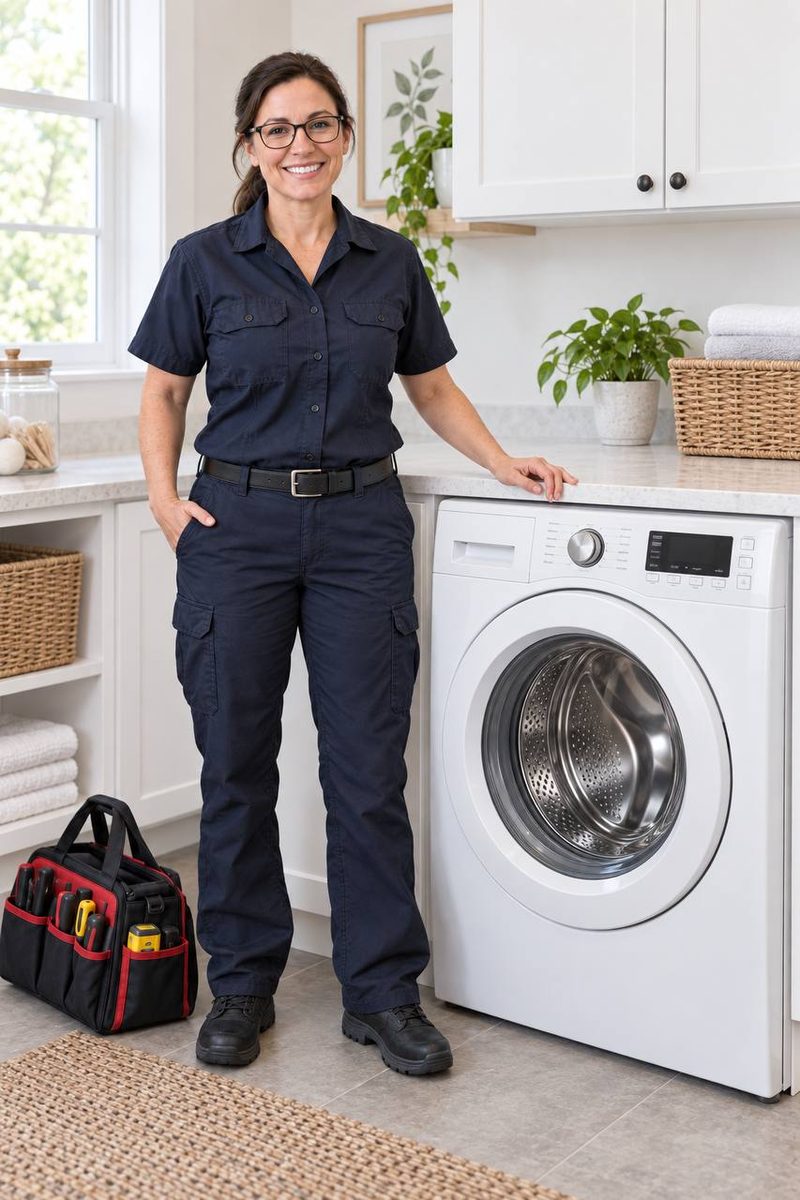
Water problems don't wait politely. Whether the drum won't empty, the spin died, or the floor keeps collecting evidence, Delta services every washer format sold in the Tri-Cities — usually in one visit.
The usual suspects behind each complaint, from our own job history.
| What You Notice | What It Usually Is | How We Fix It |
|---|---|---|
| Water won't drain | Blocked pump filter or failed drain pump | Clear or replace, then flow-test |
| No spin / weak spin | Lid lock, belt, or suspension wear | Lock/belt replacement, suspension rebuild |
| Leak at the door | Cut or aged boot gasket (front-loaders) | Boot replacement, seal test |
| Leak underneath | Hose, pump housing, or tub seal | Trace, replace, verify dry |
| Stops mid-cycle | Control fault or overheating drive | Board/motor diagnosis |
| Fills at a trickle | Sediment-clogged inlet screens or valve | Screen service or valve swap |
Call (509) 905-9174 or book online. The clearer the symptom, the better the truck gets stocked before it leaves the shop.
The tech confirms the failed part and writes one number. Approve it and the $85 visit converts to a credit.
Common parts ride with us, so most repairs close in the first visit; ordered parts return without a second trip fee.
The machine proves itself through a complete cycle before we leave — then the written warranty is yours.
Ask for the phone triage when you call — two minutes of guided steps that protect your floor before the truck arrives.
📞 Call (509) 905-9174Yes — kill power at the outlet, don't force the door on a front-loader, and if the machine has a lower service flap, drain into a shallow pan. We'll walk you through it on the phone. Floors survive these events when the first ten minutes go right.
Boot gaskets are the classic culprit and sit in the lower half of our $195–395 corridor. The repair is routine; what matters is finding what cut the boot — a bra wire, a zipper, grit — so the new one lasts.
Bearings or suspension, most often. Suspension parts are worth replacing; drum bearings on many modern machines are sealed into the tub and push repair costs against replacement value. That's a math conversation we have honestly at the machine.
It shows up at the inlet screens first — sediment slows fills long before anything else complains. On well properties around West Richland and the Benton City benches, checking upstream flow opens every washer call, because a $30 screen service often prevents a $300 misdiagnosis.
Both, plus stacked pairs and compact units. The failure maps differ — agitator couplers and lid locks on top-loaders, boots and drain pumps on front-loaders — but the truck carries first-response parts for each.
Drain and spin failures are our most common same-day washer fixes.
Three local forces shape washer work here. Volume: family households across the loop run laundry daily, and duty cycles age machines faster than calendars do. Placement: second-floor laundries in newer subdivisions turn a mild unbalance into a structural complaint, while garage installs stress valves and hoses through every temperature swing. And water: municipal supplies run moderately mineralized, and well properties add sediment — both of which arrive, eventually, at inlet screens and valves.
Washer failures travel in pairs more than any other appliance. The pump that died often died swallowing a sock; the boot that leaked soaked a shock absorber on its way down. Delta diagnoses past the first fault on every washer call, because handing back a machine that fails again in three weeks is worse than not fixing it at all.
A pump, a lock, a boot, a valve — worth fixing nearly every time. Sealed-tub bearings on a decade-old builder-grade unit — usually not. You'll get the corridor on the phone, the flat number at the machine, and the honest recommendation either way, with only the $85 diagnostic at risk.
Everything below expands on tap — open what's relevant, skip what isn't.
The drain side is the friendly end: pumps, filters and the socks jammed inside them resolve near the corridor floor. Locks, valves, boots and suspension parts occupy the middle. The ceiling belongs to drive systems and control boards — and to front-loader bearings, which on many models are sealed into the tub and force an honest repair-or-replace talk instead of a quote. Access matters too: a machine we can walk around costs less time than one wedged in a closet. One flat number, written, before work starts — always.
Leave the door or lid open between loads; trapped moisture is where smells and gasket mold begin. Run a hot maintenance wash monthly if your machine has the cycle. Check the pump filter — most front-loaders hide one behind a lower flap — every few months, because it catches coins and hair ties before they reach the pump. Replace rubber fill hoses with braided stainless on any machine past five years. And balance the load before blaming the machine: half the 'walking washer' videos we're shown are a single soaked blanket doing exactly what physics says it should.
LG and Samsung front-loaders dominate the newer subdivisions; their door boots and drain pumps are routine for us, and their error codes actually help diagnosis when you photograph them. Whirlpool-built top-loaders — including most Kenmores and Amanas — are the repairable backbone of the older grids: couplers, agitators and lid switches we stock without thinking. Speed Queen machines justify their price tag with boring reliability. Bosch compacts appear in remodeled kitchens and ask for patience more than parts.
Confirm both water valves behind the machine are fully open — half-shut valves mimic fill failures. Check that the drain hose isn't kinked behind the cabinet or shoved too deep into the standpipe. If the machine stops mid-cycle, note the exact error code before it clears; it's diagnostic gold. And if the drum won't spin, try a smaller load first — modern machines refuse to spin genuinely unbalanced loads by design. Still stuck? Call with those answers and the diagnosis is already half done.
Kennewick washer work skews mechanical: the Union–Edison grid and the streets off 27th run veteran top-loaders whose pumps, couplers and lid switches we replace weekly. Up in the heights, tighter laundry closets add extraction choreography to the job. It's our busiest washer market, which means the common Whirlpool and Kenmore parts are effectively always on the truck when we cross the bridge.
Loviisa Farms and the newer streets off Chapel Hill put laundry rooms upstairs, so Pasco leads our loop in urgent unbalance-and-vibration calls — a walking washer over a living room gets attention fast. East-side homes near Court and Sylvester bring the opposite: patient old machines worth one more pump. Builder-package front-loaders off Road 68 fail in waves, and we usually know the wave before your street does.
Central Richland's remodeled alphabet houses hide washers in spaces designed for 1940s machines — we extract, repair and re-seat them without scarring original trim. The newer southern neighborhoods send standard front-loader tickets: boots, pumps, locks. Shop proximity means a Richland washer emergency has the best same-day odds on the loop, especially if you call before the morning routes lock.
Well water defines West Richland washer work: sediment collars inlet screens and valves long before the machine itself wears out, so slow fills out here get an upstream check as standard procedure. Garage laundry setups on the acreage properties add freeze-and-bake stress to hoses and valves. Same corridor, same warranty, whether the machine lives in a mudroom or a metal shop.
Benton City washers live in compact alcoves — manufactured homes especially — and the repair often includes gymnastics the invoice never mentions. Sediment from private wells shows up at the fill screens here just like in West Richland, so we check flow first. Weekly 224 runs mean a booked washer call rarely waits more than a couple of days, and never costs extra for the drive.
Washer emergencies get phone triage first — then the earliest truck in your quadrant.